My research lies at the intersection of political economy and political behaviour. I am interested in the ways that structural economic changes – like the rise of the “knowledge economy” – have reshaped the political landscape across a wide range of rich democracies.
PhD in Government, (in progress)
Harvard University
MA in Political Science, 2016
Columbia University
MMathPhil in Mathematics & Philosophy, 2013
Oxford University, Balliol College
Under construction…
21 November 2020 • The Guardian
Under the cover of an emergency, the government awarded £18bn in coronavirus-related contracts during the first six months of the pandemic, most with no competitive tendering processes. Meanwhile contracts totalling £1.5bn have gone to companies with connections to the Conservative party. Call it a “chumocracy” or straightforward incompetence: it’s clear there’s been a woeful lack of transparency when it comes to how taxpayers’ money is spent.
19 November 2020 • Political Insight
While many highly-skilled white collar workers have been relatively insulated from the economic impact of the pandemic, the sudden transition to remote working has challenged fundamental assumptions about the knowledge economy. Can a geographically dispersed workforce collaborate effectively? How many employees will choose to work from home permanently if their employer allows? Who will be the ‘winners’ and ‘losers’ of this new labour market divide?
13 November 2020 • Byline Times
“My hope is that tools like mine can help citizens to make sense of complex and fast-unfolding stories and – above all – that greater transparency will fuel action, not apathy.”
12 December 2019 • UK in a Changing Europe
“To borrow Schattschneider’s famous phrase: moving beyond the Brexit gridlock is unthinkable save in terms of parties. But with political trust falling and alienation growing, the question remains: will the parties rise to this challenge before it is too late?”
Interactive apps built in R with Shiny
Visualizing links between Tory politicians and firms that won contracts during the pandemic
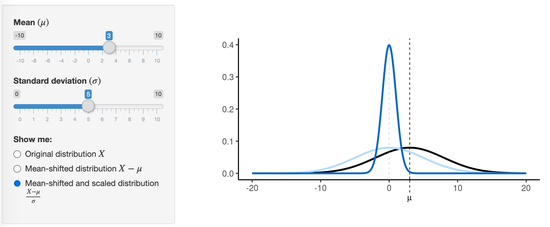
An app to help students understand z-scores.
A simulation app to help students understand and interpret confidence intervals.
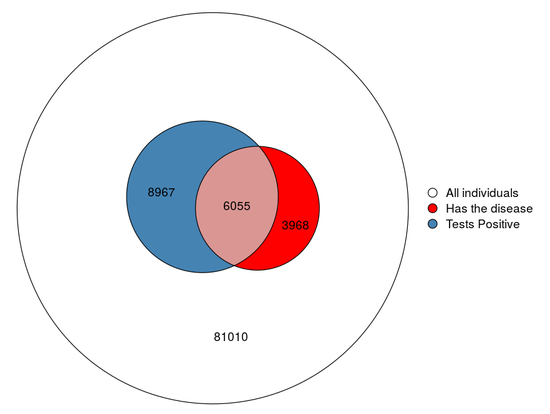
An app to help students understand the “base rate fallacy”.
An app to help students visualize and understand Bayes’ rule.
ESS-Partyfacts crosswalk: Crosswalk between ESS codes for political parties to Partyfacts ID. Allows you to merge in information from various party-level datasets (Manifesto Project, ParlGov, etc.)
ESS cumulative dataset: R script to build a cumulative dataset from ESS rounds 1-9, with harmonized variables for vote intention, education, and social class. Also provides an example of using the Partyfacts ID to merge in information from an external dataset: in this case, I use the Manifesto Project data to add a variable for the party family.
Following on from the original My Little Crony map, this visualization zooms in on the government contracts being awarded to firms linked to an Evangelical Christian sect: the Plymouth Brethren Christian Church.
A visualization of the connections between UK politicians and companies being awarded government contracts during the pandemic